The End of Giant SaaS? New Beginning for Builders Everywhere
$285bn in software market cap vanished on Feb 3rd, 2026. Is this the SaaSpocalypse?

Alvin Kantapura

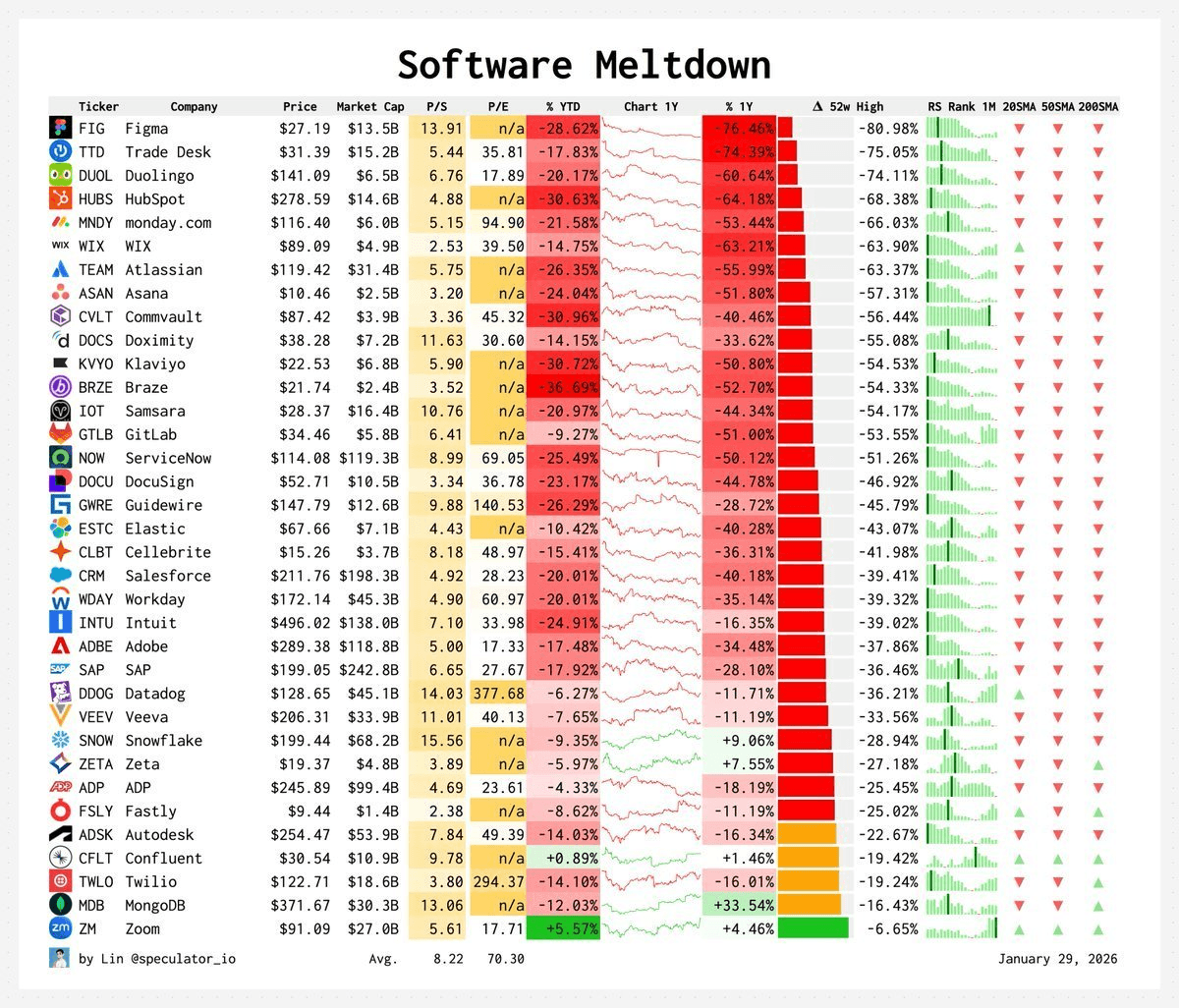
On February 3, 2026, traders at Jefferies christened a new term: the "SaaSpocalypse." In a single trading day, roughly $285 billion in software market capitalization vanished. By mid-February, the damage across the sector had reached $2 trillion. Salesforce fell 28% despite still growing revenue. Adobe dropped 26%. Atlassian lost 35% after reporting that enterprise seat counts had declined for the first time in the company's history. The iShares Expanded Tech-Software Sector ETF, the sector's benchmark, plummeted from its all-time high of $117 to $82.
The reason investors gave for selling was blunt: AI can write code now, and that means the moat around building software is evaporating. If anyone can build an app, the companies that have monopolized business software for twenty years are squarely in the crosshairs.
That sounds like panic talking. But the more you look at what's happening on the ground, the more you realize the market might be pricing in something real.
Everyone Becomes a Builder
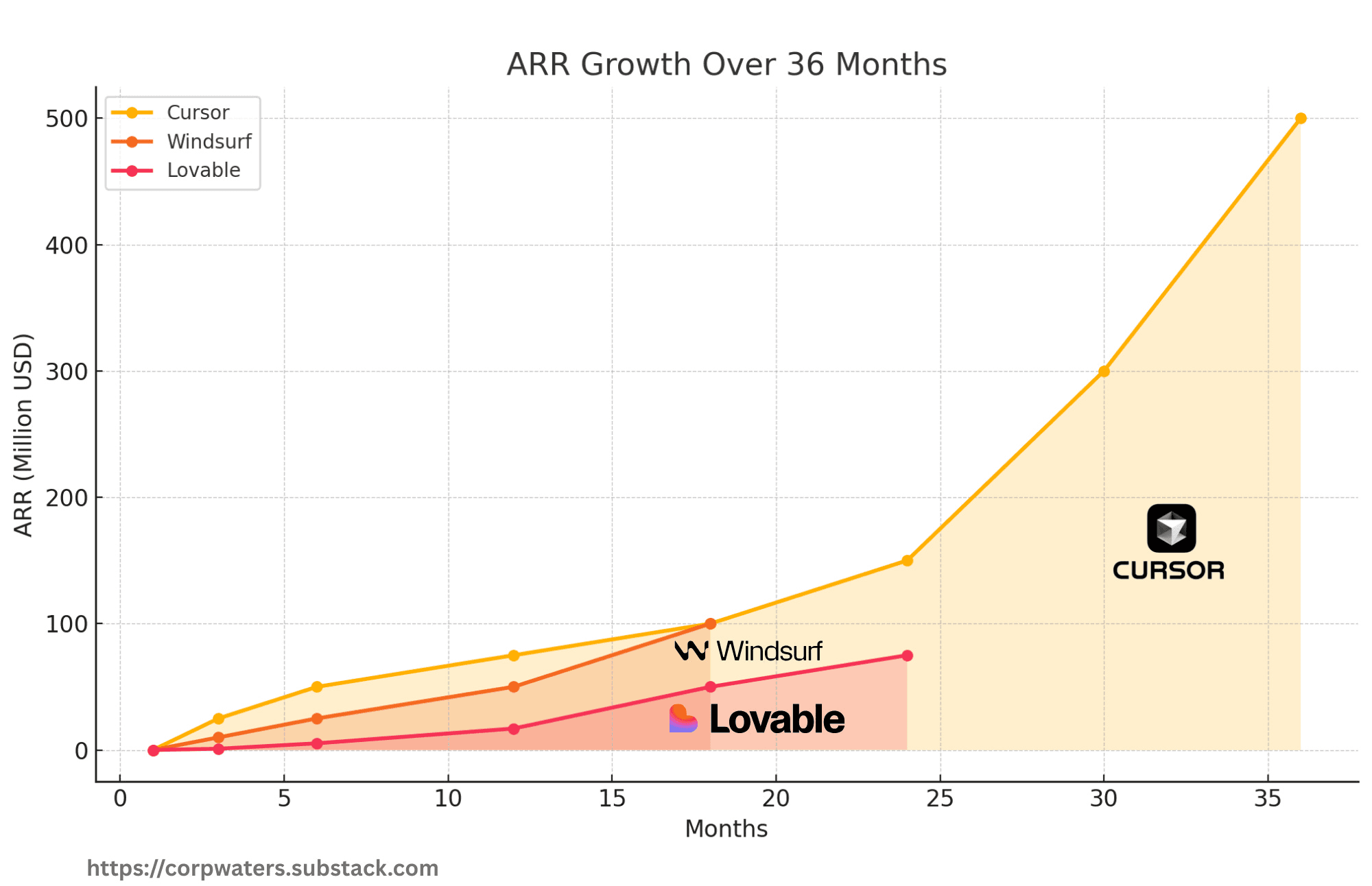
The evolution of AI coding happened fast over the past 3 years. It started around 2023, when tools like GitHub Copilot helped experienced developers write code faster. Useful, but limited. You still needed to know what you were doing.
Then came platforms like Lovable, which let non-technical people describe what they wanted and get a working prototype back. That was the first time building software felt accessible to someone outside engineering. But the output was still what you'd call "vibe code," good enough for small web apps, not production-ready systems.
By 2026, the game shifted again. Cursor hit $2 billion in annualized revenue, doubling in just three months, with over a million users and more than half the Fortune 500 as customers. Claude Code kept pace. New versions dropped every two to three months. Developers now report that AI agents handle roughly 80% of their coding work. They think through the architecture, write instructions in plain English, and let the agent execute. Their role shifted from writing every line to guiding and reviewing.
The irony is hard to miss: over 90% of developers at Salesforce itself now use Cursor. The company whose stock is crashing because of AI coding tools is also one of the biggest adopters of AI coding tools.
A Base44 ad makes this tangible. In the spot, one employee mentions she built a budgeting app. Within minutes, the entire office is building things: inventory trackers, protein calculators, book-sharing platforms, even a Spanish tutor. Building software is no longer reserved for engineers.
The Accidental Coders
What surprised me most isn't that people can build apps with AI, it's that they don't stop there. They start learning.
I have a friend, a senior business executive with zero technical background, who started building an education platform using Lovable. He'd type prompts and get working software back. But the credits burned fast, and every small change ate into his budget.
When I suggested he try Cursor, a code editor with AI built in, he resisted at first. The interface looked intimidating. But two hours after our conversation, he messaged me. He was inside Cursor, editing code, and told me it was actually easier than Lovable for the small tweaks he needed. He was learning to code almost by accident, because the feedback loop was immediate. Type something, see results, adjust, keep going.
This pattern is repeating everywhere. People in sales, operations, and customer service are picking up these tools to solve workflow problems. They start small, then take on bigger challenges. They're not becoming senior developers overnight, but they're building real solutions for their teams. The gap between "vibe code hobbyist" and "capable internal tool builder" is shrinking fast.
The Clone Wars
Here's where the stock market's anxiety starts to make sense. It's not that every company will build its own CRM from scratch. That would be impractical, and Jason Lemkin of SaaStr made this point well: "Nobody is building a homegrown CRM in Replit to replace their Salesforce instance." He's right that shipping a v1 is maybe 2% of the work, and enterprise systems of record are deeply embedded.
But something more targeted is happening. Regional players are emerging, and they're using AI-powered development to clone specific SaaS features at a fraction of the cost. I got a front-row seat to this shift.
A business partner of mine in Thailand used to distribute licenses for a major foreign SaaS company. He'd sell enterprise subscriptions, take a 10 to 20 percent margin, and deal with the frustration of waiting months for the US headquarters to care about localization. Thai businesses use LINE, not WhatsApp. Asking a global CRM company to prioritize LINE integration for a small Southeast Asian market was a losing battle.
So he changed his approach. He found white-label solutions from Indian engineering teams, already built and production-ready. He hired developers to customize them for the Thai market. Now he sells to the same enterprise clients at half the price, with better local features and faster iteration.
This isn't an isolated case. Every region has its own messaging platforms, its own regulatory quirks, its own localization needs. The cost of building software just dropped off a cliff, and the competitive moat that global SaaS companies built on expensive engineering talent is getting thinner by the month.
The Seat Problem
Piper Sandler downgraded three software stocks on February 4, citing "seat-compression and vibe coding narratives." Seat-compression names the exact mechanism through which AI eats SaaS revenue.
Most enterprise software companies charge per seat, one license per person. But when AI agents start doing work that humans used to do, companies need fewer seats. Once a CFO discovers that one agent plus a small human team can match the output of an entire department, the next step is cutting licenses. The more effective your AI adoption, the less you pay your software vendors. Atlassian's first-ever decline in enterprise seat counts is the canary in this coal mine.
This is different from the "everyone builds their own app" narrative. Companies don't need to replace Salesforce to hurt Salesforce. They just need fewer people logging into it.
The Fall of the Nerds

This revolution will reshape who sits at the top.
Before the 1990s, the people at the top of the food chain were financiers and oil executives. Software developers worked in basements, maintaining IT systems, not unlike plumbers or electricians in the office. They kept things running, but they weren't running the company. Then computers became indispensable. Spreadsheets replaced manual financial analysis. CRM systems replaced Rolodexes. The companies that built this software, and the people who could write the code, rose to the top. The richest people on earth today are all from tech: Elon Musk, Bill Gates, Mark Zuckerberg, Jeff Bezos, Sam Altman.
Noah Smith wrote about this shift in his Substack essay "The Fall of the Nerds," arguing that the very developer class that displaced the old guard is now facing its own disruption. San Francisco became the hub because elite developers clustered there. Great engineers attracted great companies, which attracted more engineers, creating a network effect that made Silicon Valley nearly impossible to compete with.
AI coding tools are dissolving that advantage. The pattern recognition, architectural intuition, and deep knowledge that took years to accumulate is being encoded into large language models and distributed to anyone with an internet connection. It's similar to what the power loom did to master weavers during the Industrial Revolution. The craft didn't disappear overnight, but as machines improved, the premium on that particular skill eroded. Production went mainstream and costs dropped. New competitors appeared from places that couldn't compete before.
Today, Germany, Canada, China, India, Singapore, and Vietnam are all producing capable developers who work alongside AI to build production-grade software. San Francisco's monopoly on software innovation is weakening.
The Factory of Agents
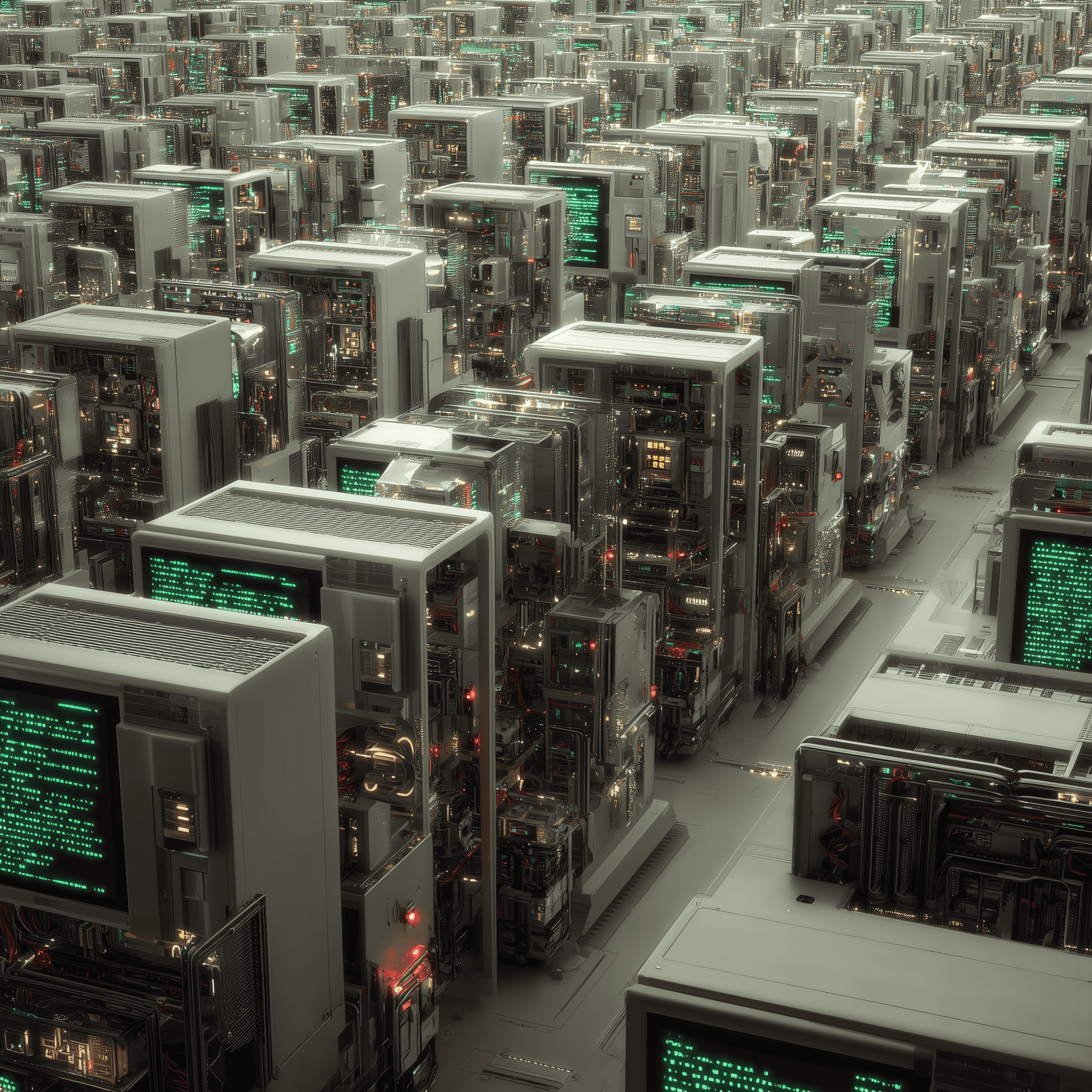
If this trend continues, and the trajectory of the last three years suggests it will, we're looking at a world where software companies run on far fewer people. Facebook might go from thousands of engineers to a few hundred, each one orchestrating fleets of AI agents that write, test, and maintain code around the clock.
Investment shifts from human capital to compute capital. More GPUs, more data centers, more agent capacity. The returns could be enormous, which raises uncomfortable questions about where economic value concentrates.
During the Industrial Revolution, factory machinery concentrated wealth in the hands of a few industrialists while workers' wages stagnated. Thomas Piketty documented this pattern in "Capital in the 21st Century": when the return on capital exceeds economic growth, inequality widens. We might be heading into a similar dynamic, but this time it's not physical labor being replaced. It's cognitive labor. The skills that were supposed to be the safe bet, university degrees, specialized knowledge, years of accumulated expertise, are the ones under pressure.
The New Era of Software

Software isn't dying. Its role in the economy is about to get bigger, not smaller, especially as physical AI and robotics come online. Every robot, every IoT device, every automated workflow runs on software. The question is who builds it and who captures the value.
The era of a few giant companies monopolizing business software from a single city is fading. What's replacing it is messier and more distributed. Capable builders exist everywhere now, regional solutions compete with global ones, and the cost of creation keeps falling.
For the SaaS giants, survival means building something AI-native that smaller competitors can't replicate easily. For everyone else, this moment is an invitation. The tools are more accessible than they've ever been, and the builders who learn to use them, whether they sit in Bangkok, Berlin, or Bangalore, are the ones who will shape what comes next.
About
Featured Posts